






Chantilly Lace: A Story of Elegance That Has Endured for Centuries
Picture a lacemaker in the seventeenth century. A quiet room. Dozens of bobbins weaving together in a slow, almost hypnotic rhythm. She is simply doing her work, unaware that the lace taking shape beneath her hands will one day become Marie Antoinette's favorite fabric, the bridal veil of generations of European women, and the enduring symbol of a femininity that no revolution would ever truly erase.
This is how Chantilly lace was born: from skilled hands, from gestures repeated thousands of times until they became second nature, and from a tradition passed down through the centuries. That artisanal heritage has never disappeared completely. It can still be seen today in the way the lace drapes, in the way it catches the light, and in the way its delicate floral motifs seem almost alive.
What makes Chantilly lace so extraordinary is not only its remarkable history. It is the fact that this history is still very much alive, visible in every yard of lace produced with respect for traditional craftsmanship. In this article, we'll explore its origins, the techniques behind its creation, its relationship with fashion, and the details that distinguish truly exceptional Chantilly lace from ordinary imitations.

Table of Contents
- The Origins of an Iconic Lace
- How to Recognize Authentic Chantilly Lace
- The Craftsmanship Behind Chantilly Lace
- Chantilly Lace and Fashion: A Love Affair That Never Fades
- How to Choose and Wear Fine Lace
- Why Elegant Lace Remains the Fabric of Desire
The Origins of an Iconic Lace
To truly understand Chantilly lace, we need to step back in time. The story begins in the seventeenth century in the town of Chantilly, north of Paris—the same place renowned today for its famous whipped cream and prestigious horse races. It was here that one of the most iconic textiles in the history of Western fashion was born.
The first lace workshops in Chantilly date back to 1665, when Jean-Baptiste Colbert, Minister of Finance under Louis XIV, set out to develop France's lace industry in order to reduce the kingdom's dependence on expensive imports from Flanders and Venice. Chantilly quickly became a center of excellence for bobbin lace, a meticulous handcraft requiring countless hours of work on a lace pillow, where dozens of bobbins are woven together according to intricate, almost hypnotic patterns.
Before long, Chantilly lace became the fabric of choice for Europe's aristocracy. Noblewomen commissioned it to embellish cloaks, bridal veils, sleeves, and collars. During the eighteenth century, however, the French Revolution dealt a devastating blow to the industry. Lace had become a symbol of aristocratic privilege, precisely what the new France sought to abolish. Many lacemakers relocated to Belgium, where the tradition continued to flourish. This is why the term French lace today often refers to a heritage that extends beyond France's borders.
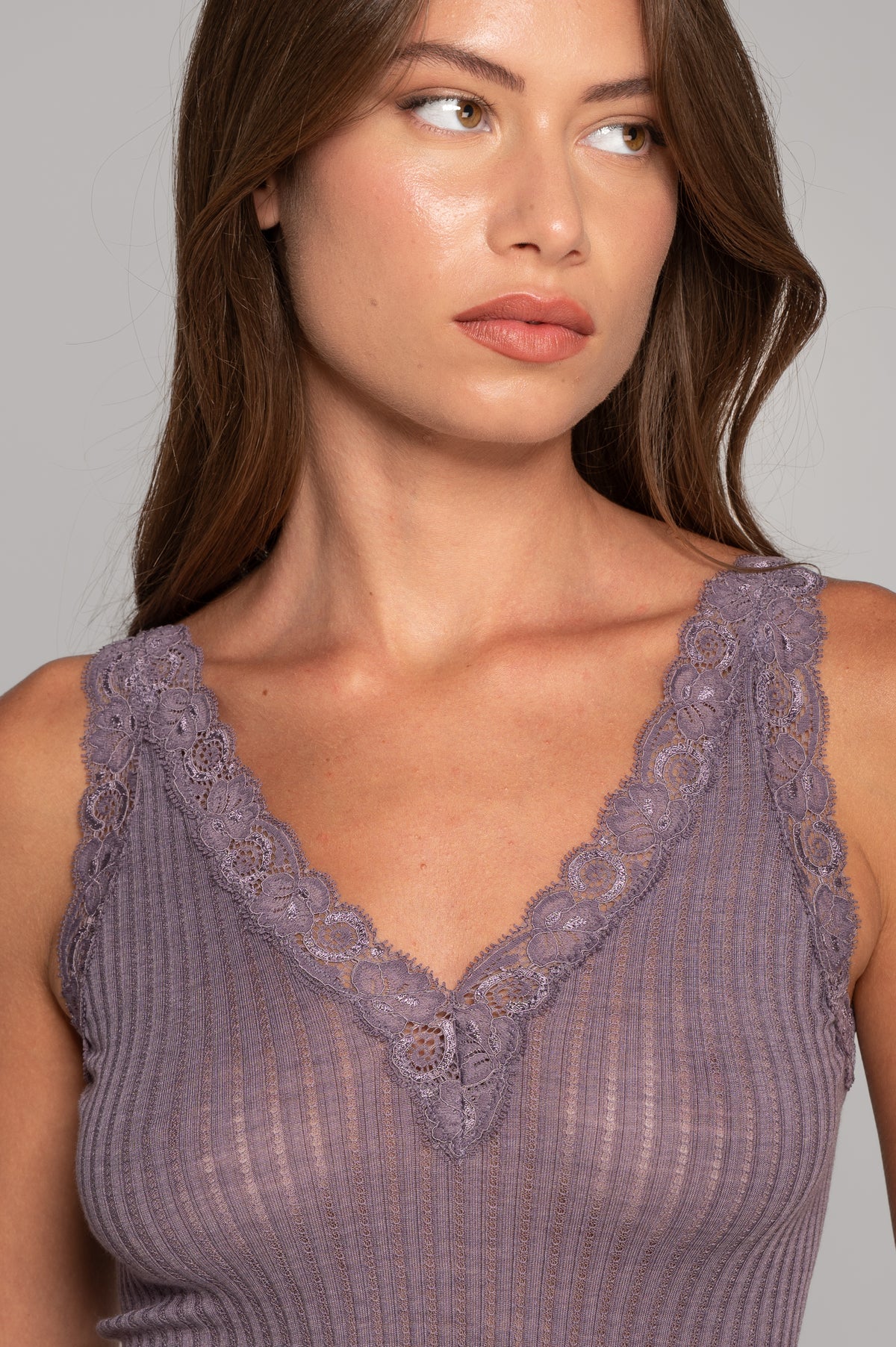
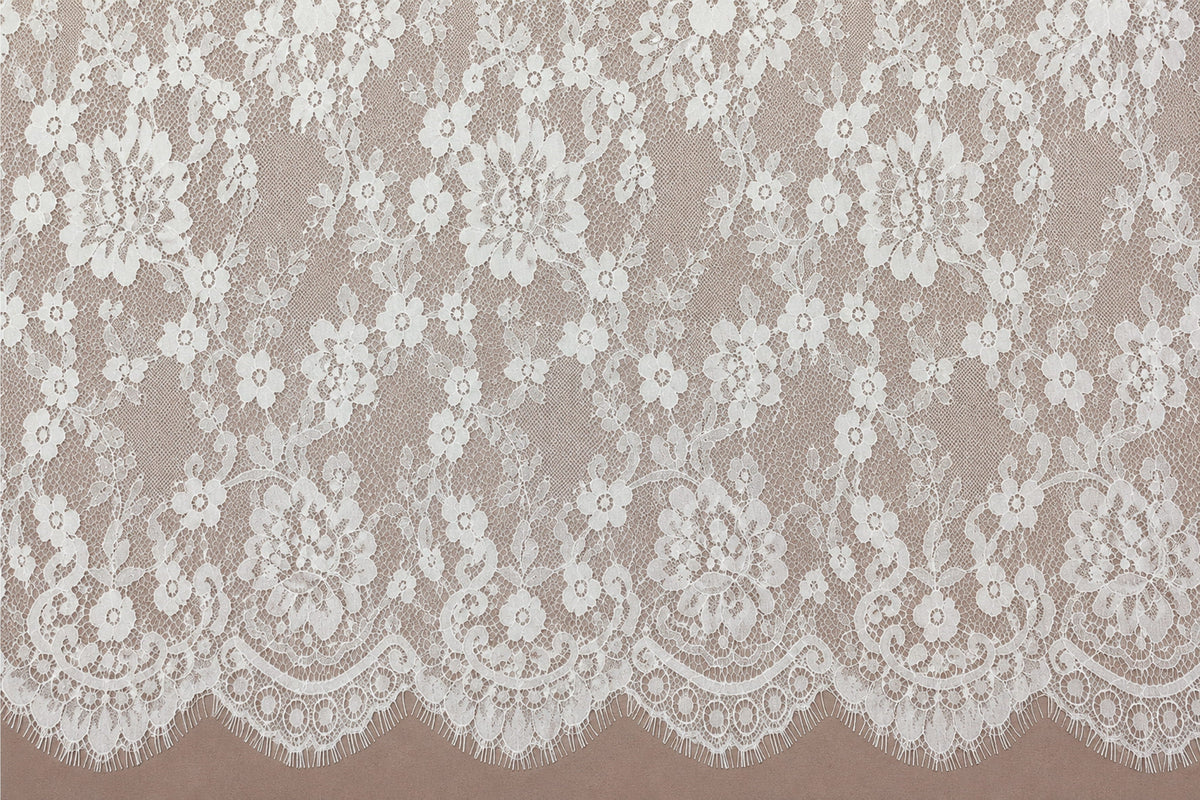
The nineteenth century marked the golden age of Chantilly lace. With the rise of Romanticism and later the Belle Époque, it returned to the forefront of fashion, adorning bridal veils, evening gowns, parasols, and elegant accessories. Although mechanical production attempted to replicate its beauty, it never fully succeeded. The lace's extraordinary lightness, its delicate floral and botanical motifs, its fine hexagonal net ground—known as the réseau—and the slightly thicker outlining thread called the cordonnet remained unmistakable hallmarks of true craftsmanship.
Today, the Musée de la Dentelle de Chantilly continues to preserve historical documents and original lace samples, offering a remarkable testament to this centuries-old tradition of artisanal excellence.
How to Recognize Authentic Chantilly Lace
Distinguishing genuine Chantilly lace from a mass-produced imitation isn't always easy—but once you know what to look for, the difference becomes unmistakable.
The first detail to observe is the ground. Traditional Chantilly lace features an exceptionally fine hexagonal réseau, the delicate mesh that forms the foundation for its decorative motifs. In high-quality lace, this net appears perfectly even, almost transparent when held to the light, with a level of consistency that historically could only be achieved by skilled artisans—or today, by exceptionally precise Leavers looms.
The second defining feature is the cordonnet—a slightly thicker outlining thread that traces the contours of flowers, leaves, vines, and the ornamental guipure motifs characteristic of Chantilly lace. Traditional designs are almost always inspired by nature: blossoms, acanthus leaves, winding tendrils, and graceful botanical forms that feel refined rather than overly decorative.

A third hallmark is its color. Historically, Chantilly lace was produced primarily in black or ivory. Black Chantilly lace, in particular, was traditionally made from hand-dyed silk. Silk reacts to dye in a way that cotton or nylon simply cannot, producing a deep, luminous black with subtle iridescent reflections when viewed against the light—completely different from the flat appearance of synthetic lace.
Today, the term Chantilly lace is often used more broadly to describe both handmade bobbin lace and machine-made lace that recreates its signature floral aesthetic and fine net background. Even so, exceptional lace can still be recognized by its hand—the way it feels to the touch—and by the way it retains its structure over time. Fine lace does not lose its shape, wrinkle excessively, or become distorted after years of wear. Its elegance is made to endure.
The Craftsmanship Behind Chantilly Lace
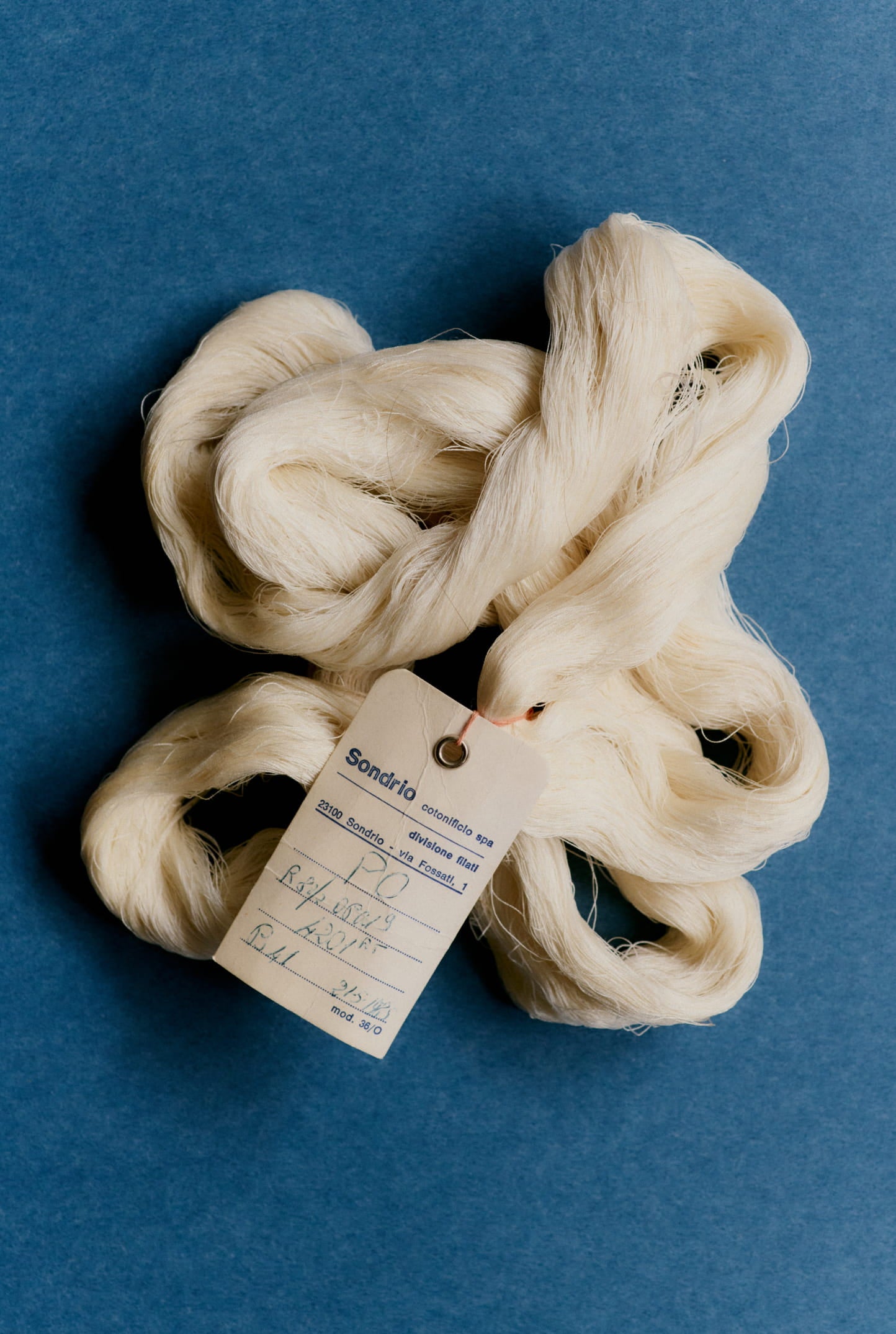
Bobbin lace is the oldest—and arguably the most intricate—technique used to create Chantilly lace. The lacemaker works on a cylindrical lace pillow covered with a perforated pattern that serves as the design guide. Dozens, sometimes even hundreds, of bobbins wound with fine thread are woven together by hand, following an intricate sequence of movements. The process is slow, methodical, almost meditative. Just a single inch of exceptionally fine lace can require hours of work, while an entire bridal veil may take months—or even years—to complete.

Alongside bobbin lace, there is also needle lace, a technique historically associated with Venice and the island of Burano but practiced in France as well. Using nothing more than a needle and thread, the lacemaker builds the design stitch by stitch, allowing for even greater artistic freedom. The result is a lace with remarkable depth and sculptural quality, offering a three-dimensional effect that differs from bobbin lace.
The nineteenth century brought another important innovation: machine-made lace. Thanks to inventions such as the Leavers loom, lace became more widely accessible without entirely sacrificing quality. Still in operation today in Calais, France, and Nottingham, England, Leavers looms are extraordinary machines with thousands of moving parts, capable of reproducing the movements of traditional lacemakers with astonishing precision.
What distinguishes premium Leavers lace from lower-quality industrial lace goes far beyond the manufacturing process itself. The quality of the thread, the tension of the loom, the number of production stages, and the meticulous finishing all play a decisive role. Exceptional lace speaks for itself: it feels soft yet substantial, retains its three-dimensional structure, and possesses a beauty that doesn't rely on perfect lighting to be appreciated.
Chantilly Lace and Fashion: A Love Affair That Never Fades
Throughout fashion history, lace has never truly fallen out of favor—even during periods when designers claimed to reject ornamentation altogether. In the 1920s, Coco Chanel revolutionized women's fashion by abandoning corsets and excessive decoration in favor of jersey, tweed, and understated elegance. Yet by the 1930s, during what fashion historians often describe as her romantic period, lace quietly reclaimed its place in her collections, almost as though it had naturally returned to the spotlight.
During the second half of the twentieth century, lace became the language of refined sensuality. Luxury lingerie embraced it as one of its defining materials, transforming bras, briefs, bodysuits, and nightgowns into expressions of elegance as much as intimacy. Among the great couturiers, Chanel favored black lace, Balenciaga explored rich, dramatic colors, while Dior and Balmain celebrated its timeless beauty in white.
By the 1980s and 1990s, lace had moved beyond lingerie to become an unmistakable statement in ready-to-wear and haute couture. Having already returned to prominence in the elegant silhouettes of the 1950s, it never lost its place in high fashion. In 1994, Thierry Mugler created one of the most memorable lace gowns in fashion history: a sculptural black Chantilly lace dress enhanced with pink velvet and satin, now regarded as one of his most iconic creations. Rather than disappearing from fashion's more daring moments, Chantilly lace became one of their defining elements.
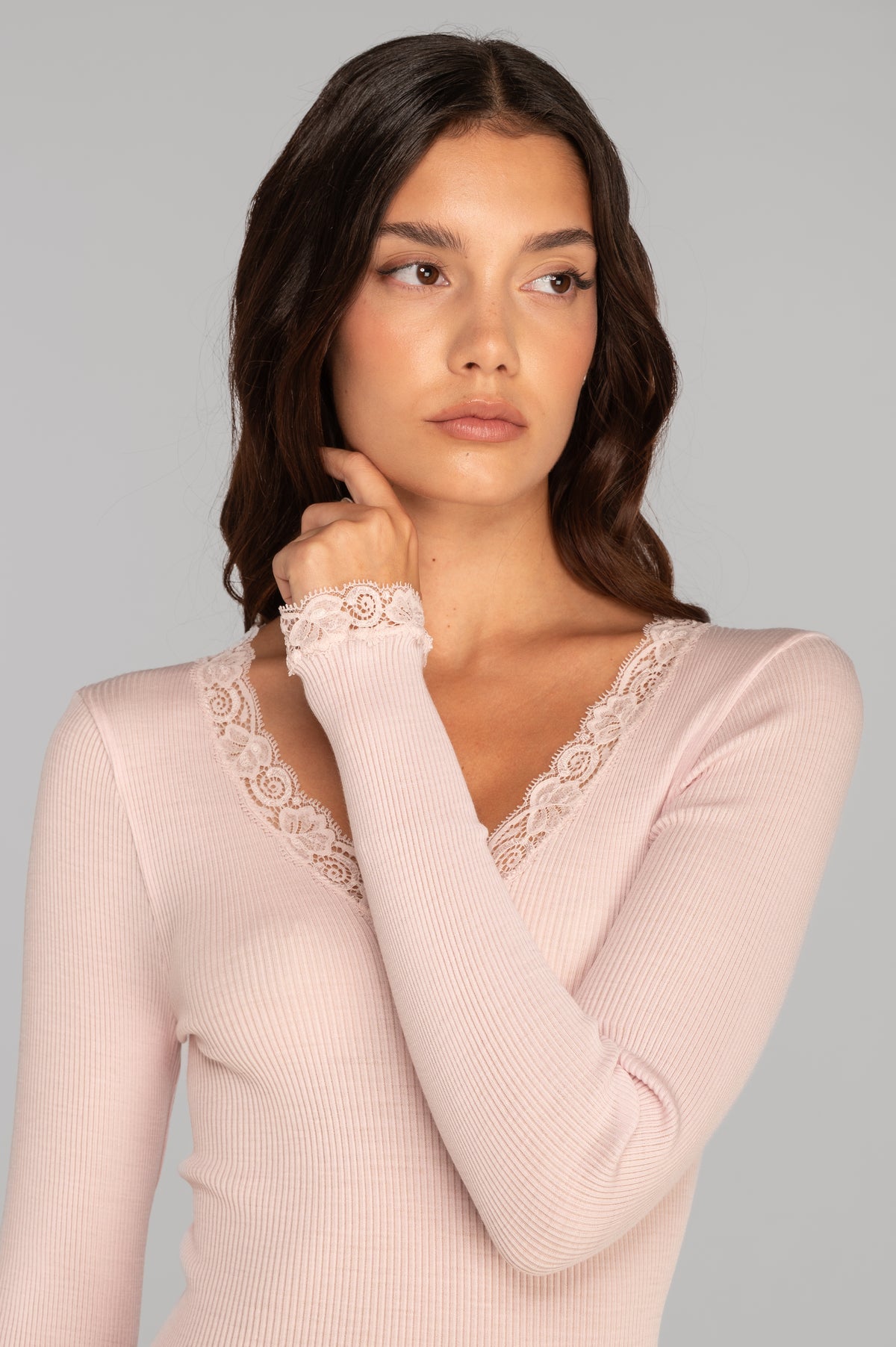
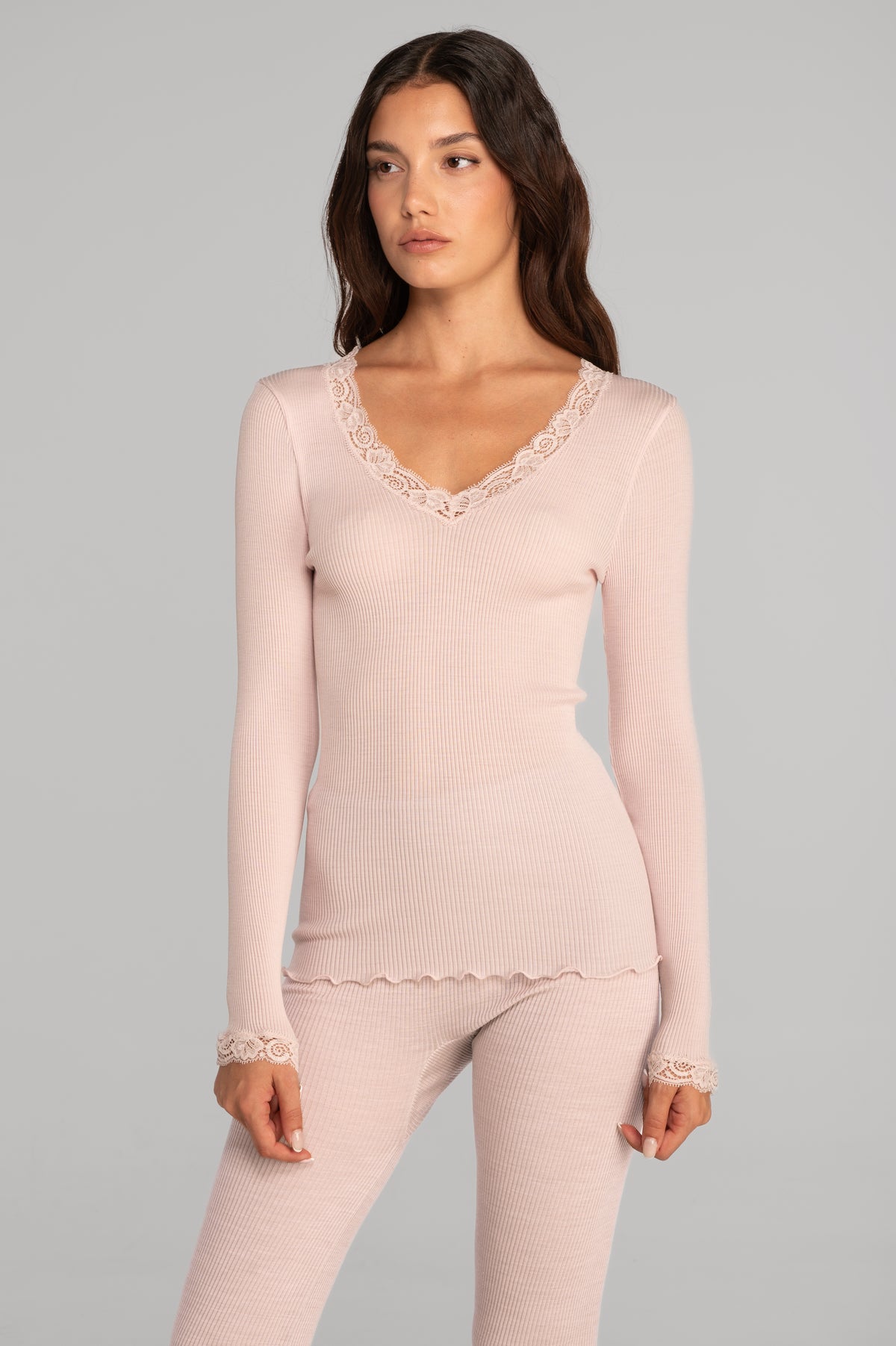
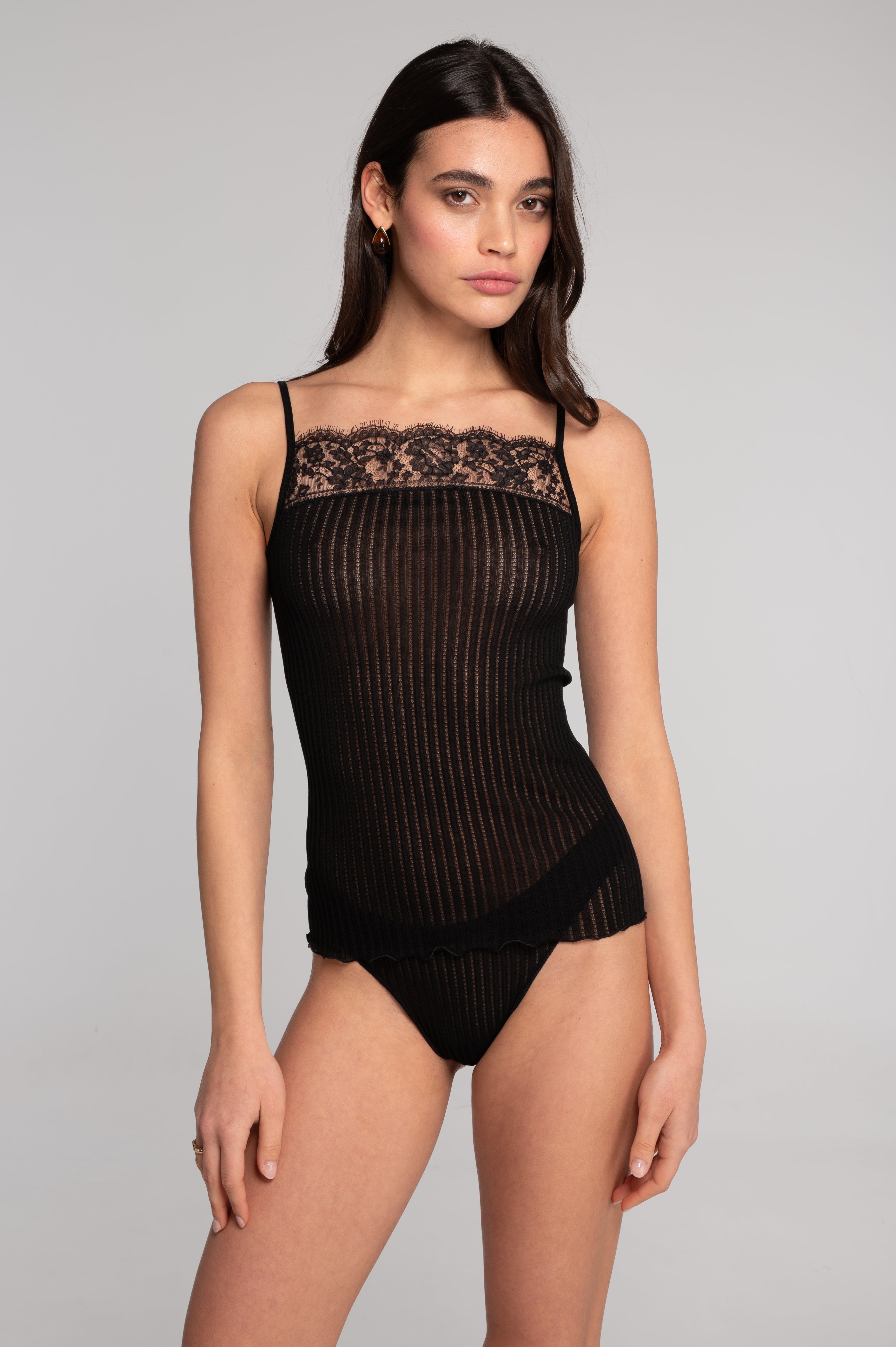
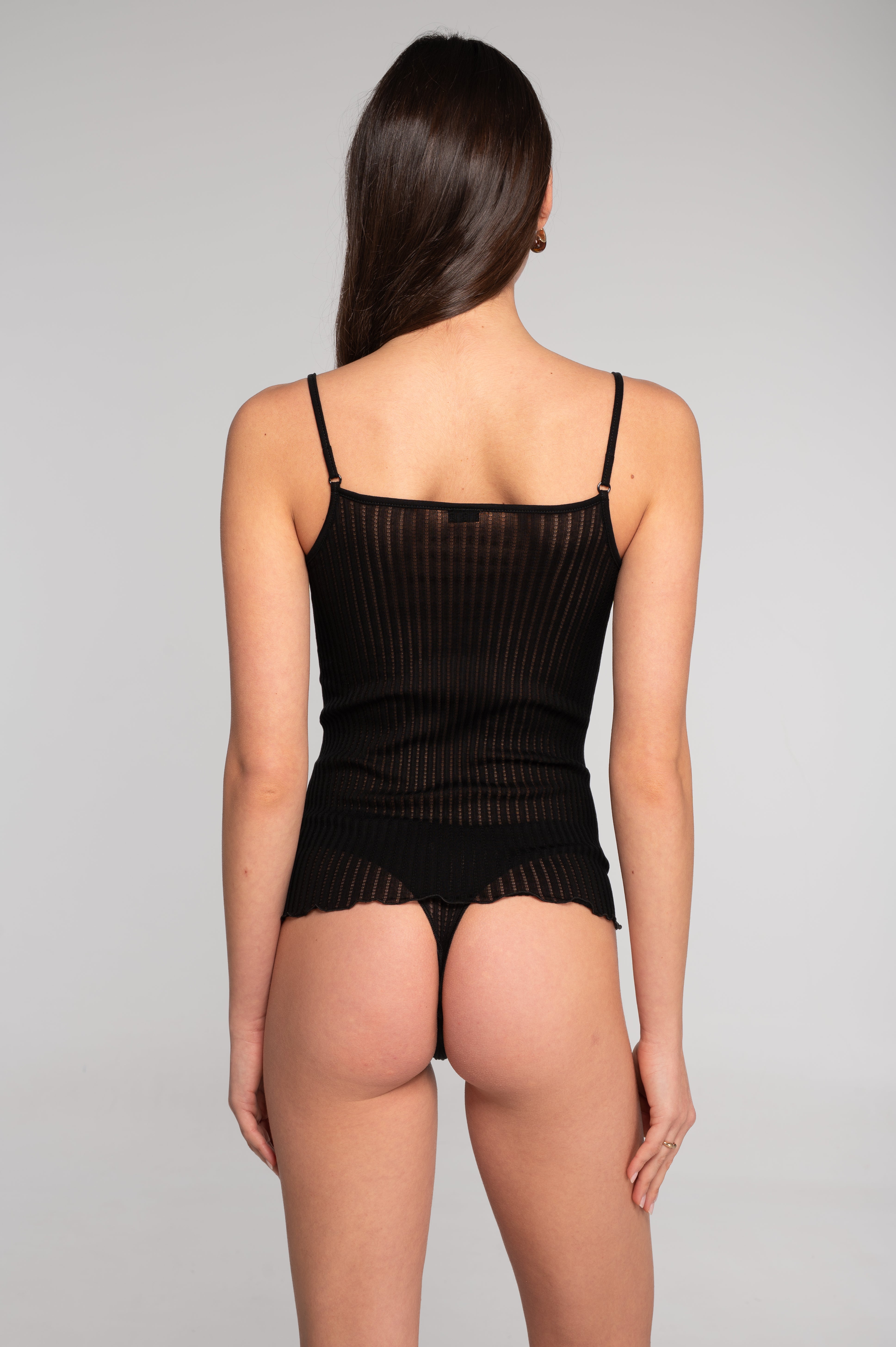
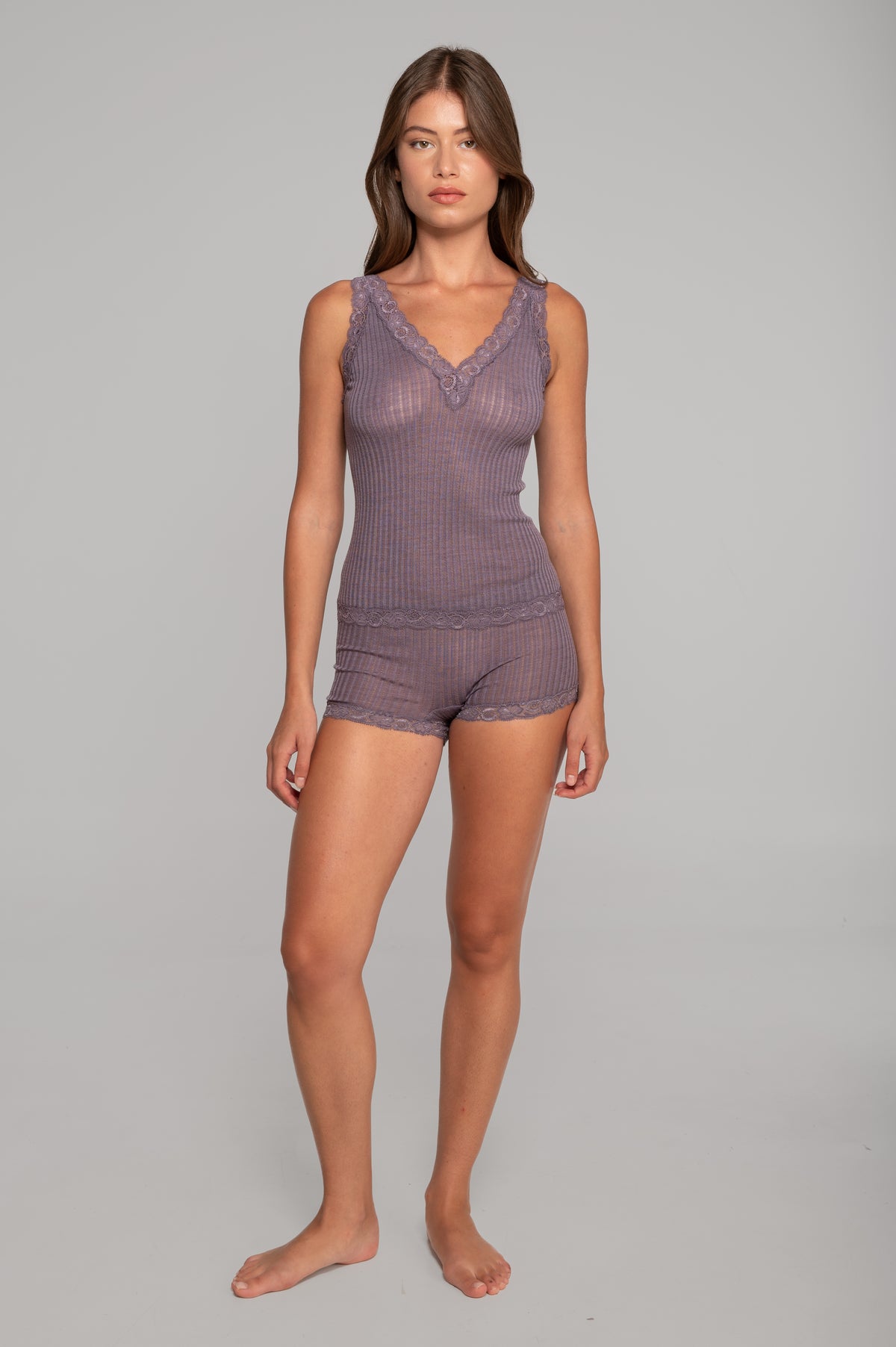
Today, Chantilly lace is experiencing yet another renaissance. The growing appreciation for slow fashion, exceptional craftsmanship, and responsibly sourced materials has renewed interest in fine lace as a conscious choice rather than a passing trend. Fashion houses such as Dolce&Gabbana, Elie Saab, and Valentino continue to reinterpret its timeless appeal. Yet perhaps its most authentic expression can still be found among manufacturers deeply rooted in artisanal tradition. Oscalito, the historic Turin-based brand, incorporates Chantilly lace into several of its collections, celebrating the elegance and craftsmanship of this extraordinary textile.

How to Choose and Wear Fine Chantilly Lace
Choosing a Chantilly lace garment or accessory begins with embracing one simple idea: fine lace is not an impulse purchase. It is something you choose intentionally, appreciating the craftsmanship, heritage, and beauty behind every detail.
When evaluating the quality of Chantilly lace, there are several characteristics worth considering. The first is its weight and structure. High-quality lace should feel light yet substantial, maintaining its shape rather than collapsing between your fingers. This balance is a sign of premium fibers and expert craftsmanship. The second element is the consistency of the pattern. In beautifully made lace, floral motifs, leaves, scalloped edges, and decorative details are perfectly balanced and free from visible imperfections. Symmetry and precision are unmistakable indicators of exceptional workmanship. The finished edges also deserve close attention. Premium Chantilly lace features carefully refined borders without loose threads, fraying, or irregularities, allowing the fabric to retain its elegance over time.
Natural-fiber lace requires equally thoughtful care. Hand washing in cold water with a gentle detergent, followed by flat drying away from direct heat, helps preserve its beauty. Fine lace should never be wrung out or tumble dried—it deserves to be treated with the same care that went into creating it.
As for styling, Chantilly lace has a distinctive personality of its own. It doesn't need to compete with elaborate embellishments or heavily textured fabrics. Instead, it pairs beautifully with refined materials such as silk, satin, or premium jersey, allowing its delicate craftsmanship to take center stage. Black remains the timeless classic, but ivory and soft blush Chantilly lace offer an equally sophisticated alternative.
For anyone discovering luxury lace for the first time, lingerie is perhaps the perfect place to begin. It is the most intimate way to experience the extraordinary comfort, softness, and refinement that distinguish authentic Chantilly lace from any ordinary fabric.
Why Elegant Lace Remains the Fabric of Desire
In an age when products are made quickly, consumed quickly, and forgotten just as quickly, French Chantilly lace represents something entirely different. It was never created to be disposable—it was created to last.
There is something profoundly human about lace. Few textiles still bear such a visible connection to the hands that made them. Every piece tells a story of patience, precision, and generations of accumulated expertise. Wearing Chantilly lace means wearing countless hours of craftsmanship, technical mastery, and artistic tradition.
Today, the word tradition is sometimes mistaken for something outdated. In the case of Chantilly lace, the opposite is true. Tradition is what preserves extraordinary knowledge, ensuring that remarkable techniques and timeless beauty continue to exist. The historic Leavers mills of Calais, where authentic Chantilly lace is still produced today, remain among the last European manufacturing centers dedicated to safeguarding this exceptional textile heritage.
This same philosophy guides Oscalito's approach. Every day, the company selects exceptional materials, respects the complexity of traditional manufacturing techniques, and refuses to compromise when it comes to the fabrics that come into direct contact with the skin. Using Chantilly lace to create and embellish its garments is therefore far more than a decorative choice—it is a statement of values. It reflects the belief that beauty matters, that craftsmanship deserves to endure, and that the people who wear these garments deserve nothing less than the very best. And in the case of Chantilly lace, the very best is a tradition that has been woven for more than five centuries.